Humanoids for Medicine
Can general-purpose humanoids do clinical work? Three studies, ending in Nature 2026.
2024 to 2026
Purpose-built surgical robots cost millions and do one thing. A general-purpose humanoid is cheaper, mobile, and already shaped like the people whose tools and workspaces hospitals are built around. Can it actually do clinical work? Our lab spent three studies answering that, and I built the hardware that let a humanoid hold a surgeon’s instruments in all of them.
1. Humanoids in Hospitals: can a humanoid use medical tools at all?
The first study (arXiv 2025, co-second author) asked the prerequisite question: can a humanoid surrogate perform dexterous medical interventions using the equipment clinicians already use? It characterized humanoid capability against the demands of real clinical tasks.

My contribution: I designed the mount system that lets a humanoid operate standard medical tools, optimizing mass and center of mass, verifying rigidity under load, and validating it in bench and simulation studies. That mount is the piece of hardware the next two papers are built on.
2. LapSurgie: teleoperated handheld laparoscopy
LapSurgie (ICRA 2026) took the platform into laparoscopy: a humanoid holding handheld laparoscopic instruments under teleoperation, with the remote-center-of-motion constraint enforced at the port. I contributed mechanical work to this version and helped present it at ICRA 2026.
3. In vivo feasibility: Nature, 2026
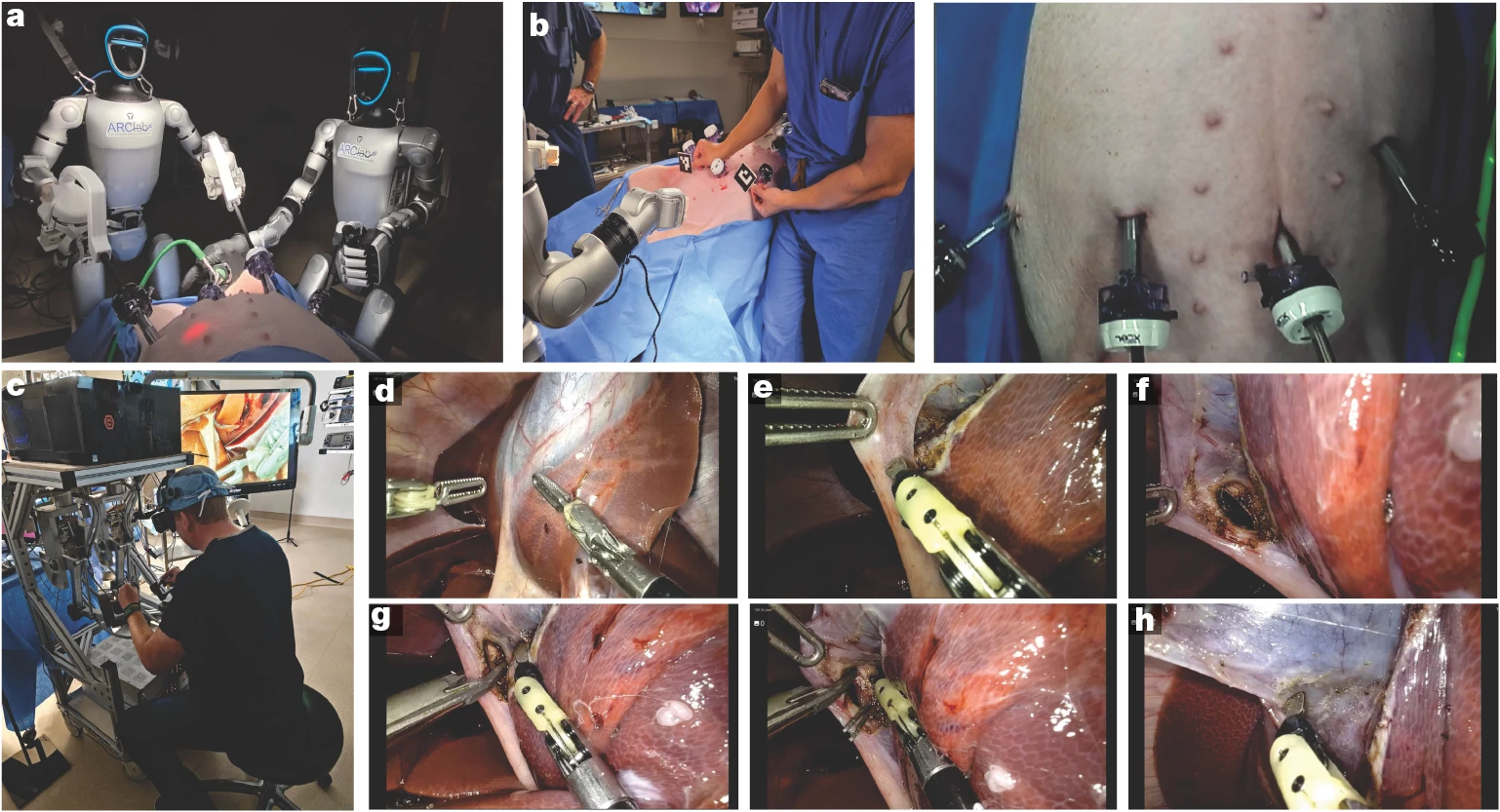
The Nature study is the full evaluation: benchtop characterization, dry-lab user studies across surgical experience levels, and in vivo porcine surgeries.
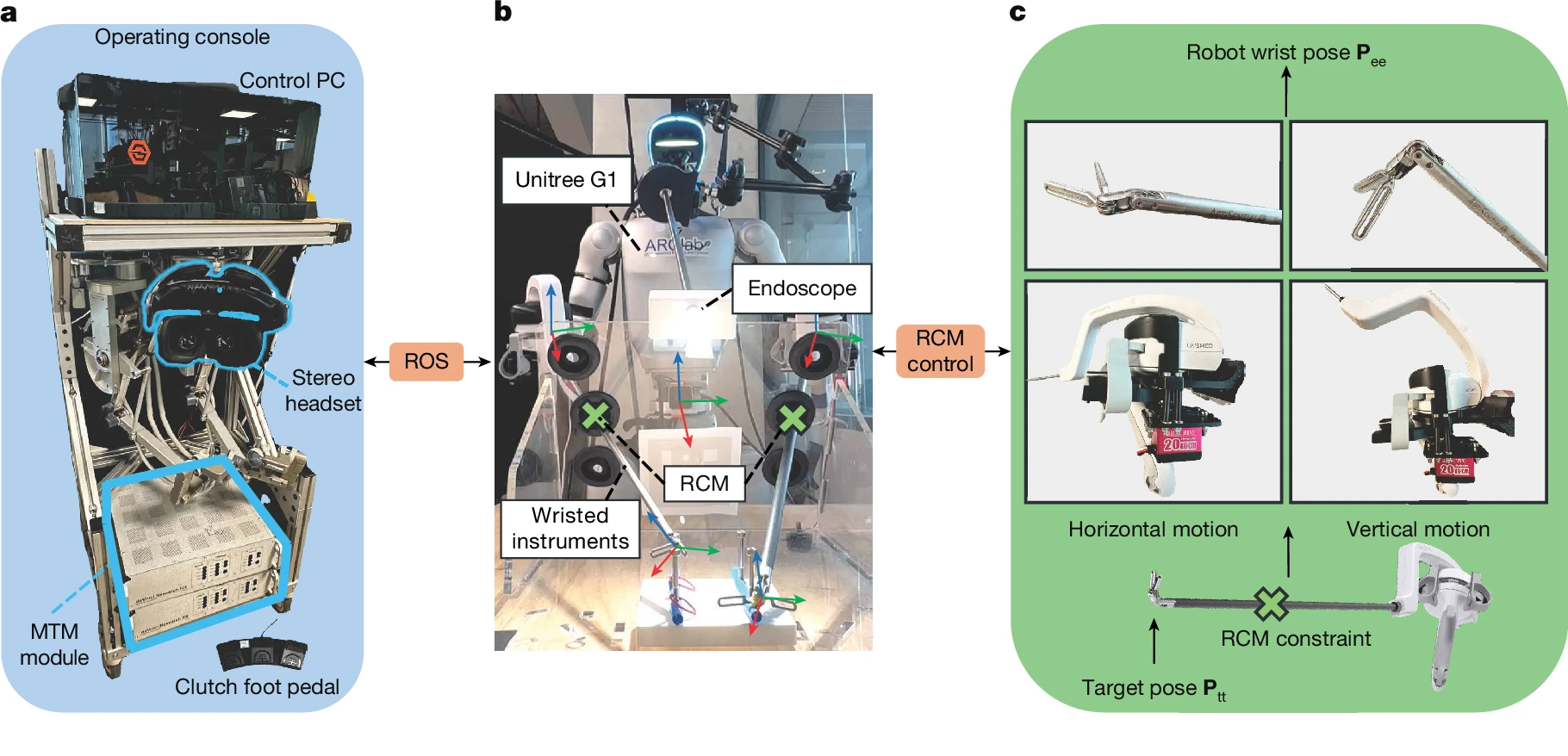
A surgeon drives the humanoid from a da Vinci-style console (stereo headset, MTM manipulators, clutch pedal) over ROS, while the robot holds standard laparoscopic instruments through mounts that enforce the RCM constraint at the port.
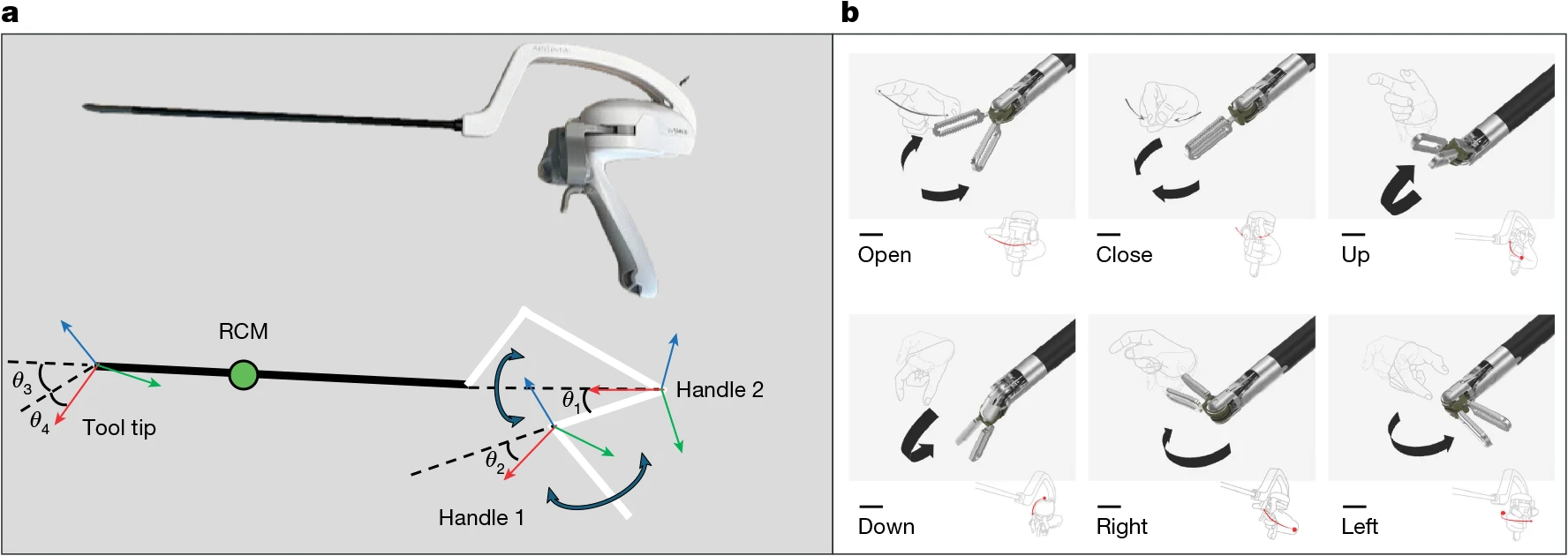
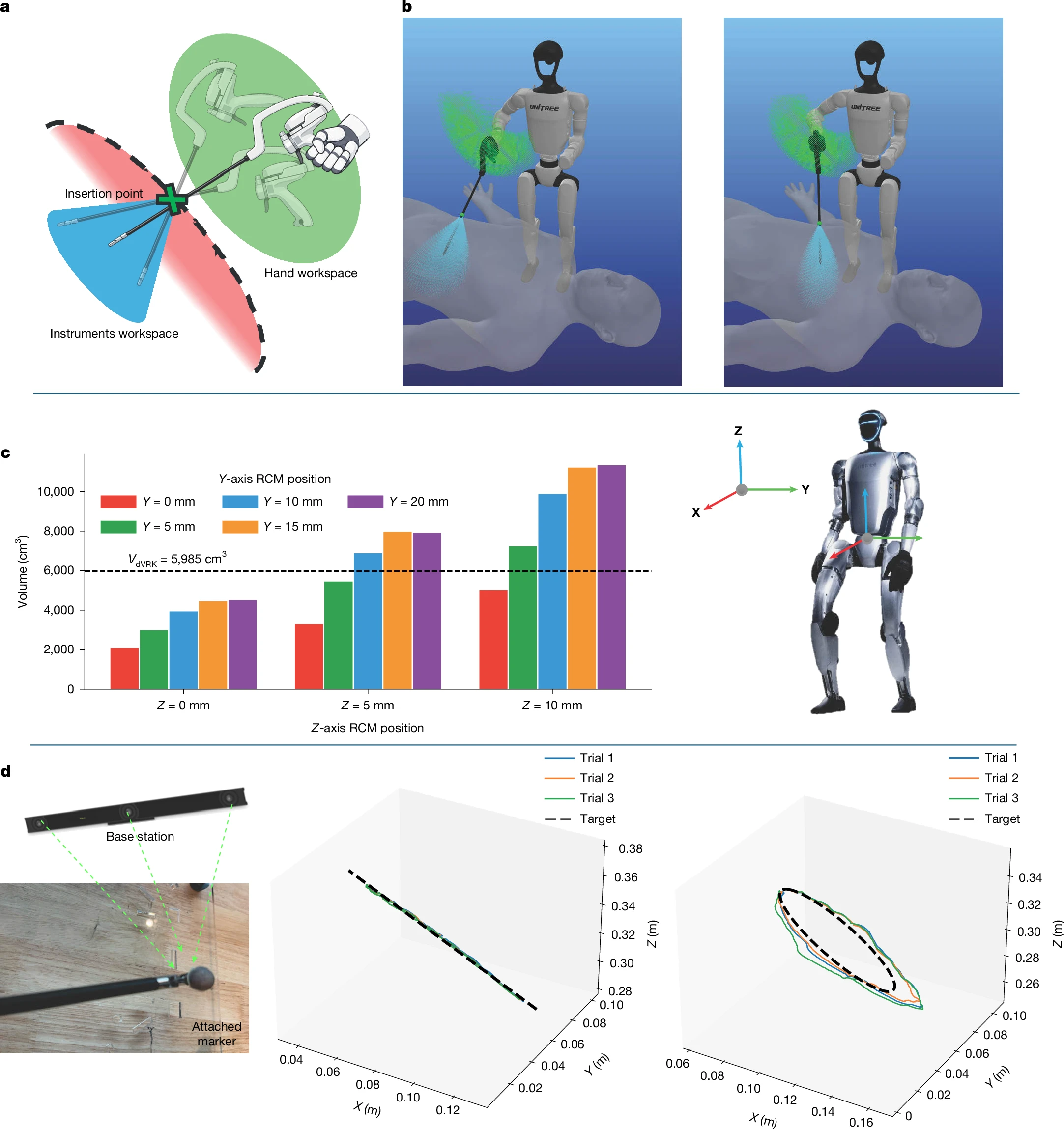
Participants from novices to senior surgeons performed peg-transfer and FLS-style tasks on the humanoid, the dVRK/da Vinci, and manual laparoscopy, followed by the in vivo procedures. The results locate humanoid teleoperation between manual laparoscopy and purpose-built surgical robots on accuracy and workload measures.
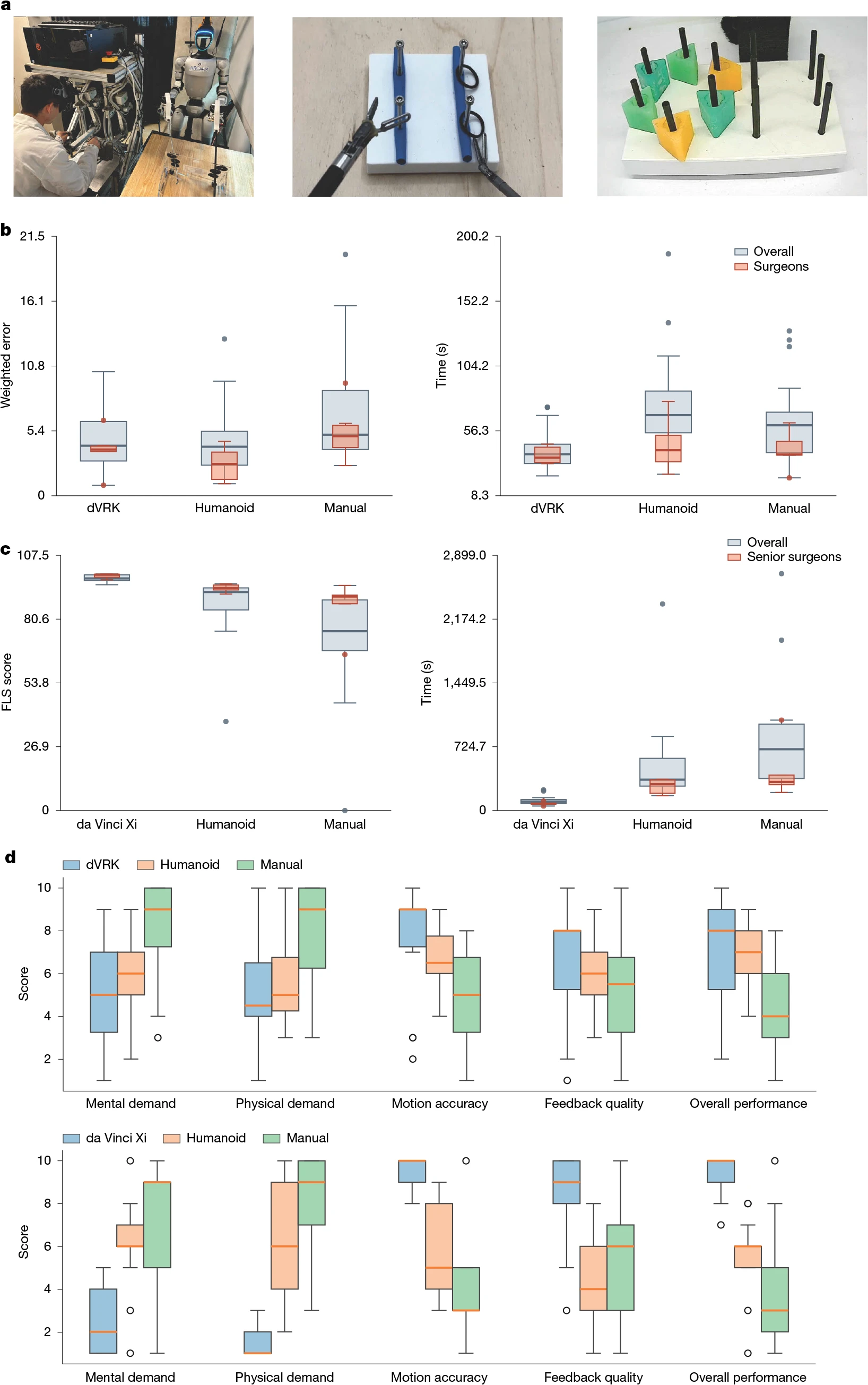
My contribution: the tool-mount system that lets the humanoid actuate standard medical instruments, mechanical setup for every surgical session, and coordinating our 10-person robot–clinician team through the live surgeries, turning surgeon feedback into hardware revisions between sessions.